
剑侠情缘
科学施策 精准预判 严阵以待 让摸狮子习俗安全有序进行_我的网站

A |
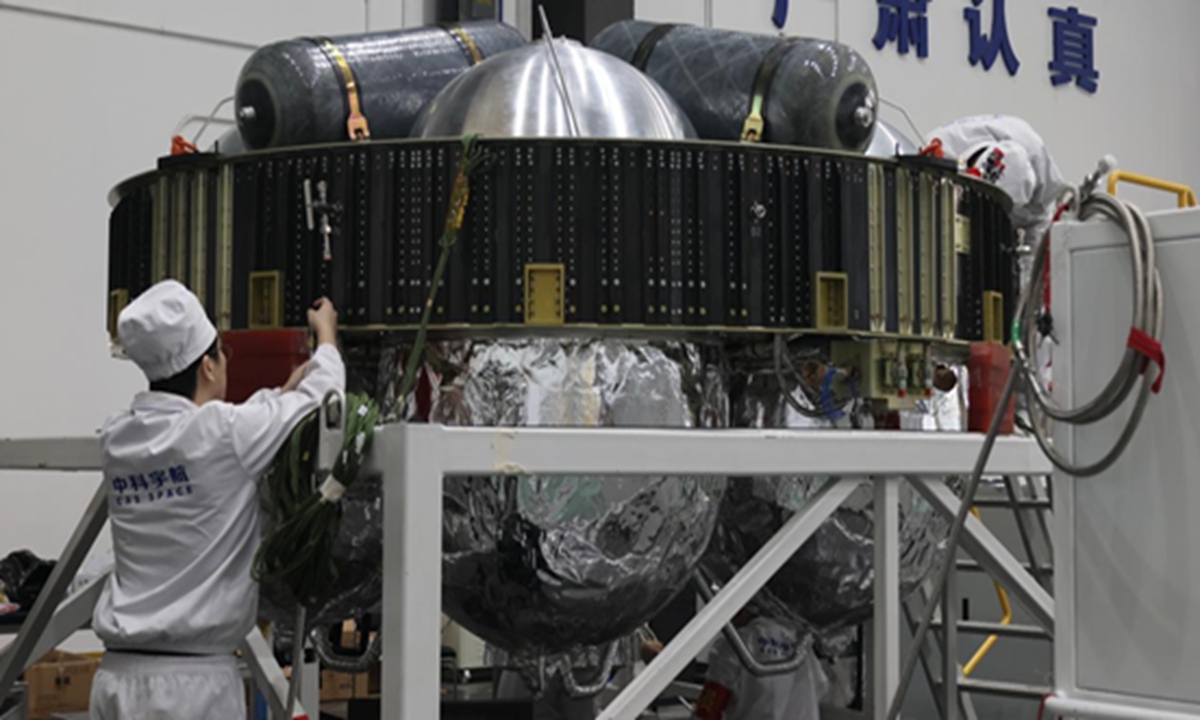
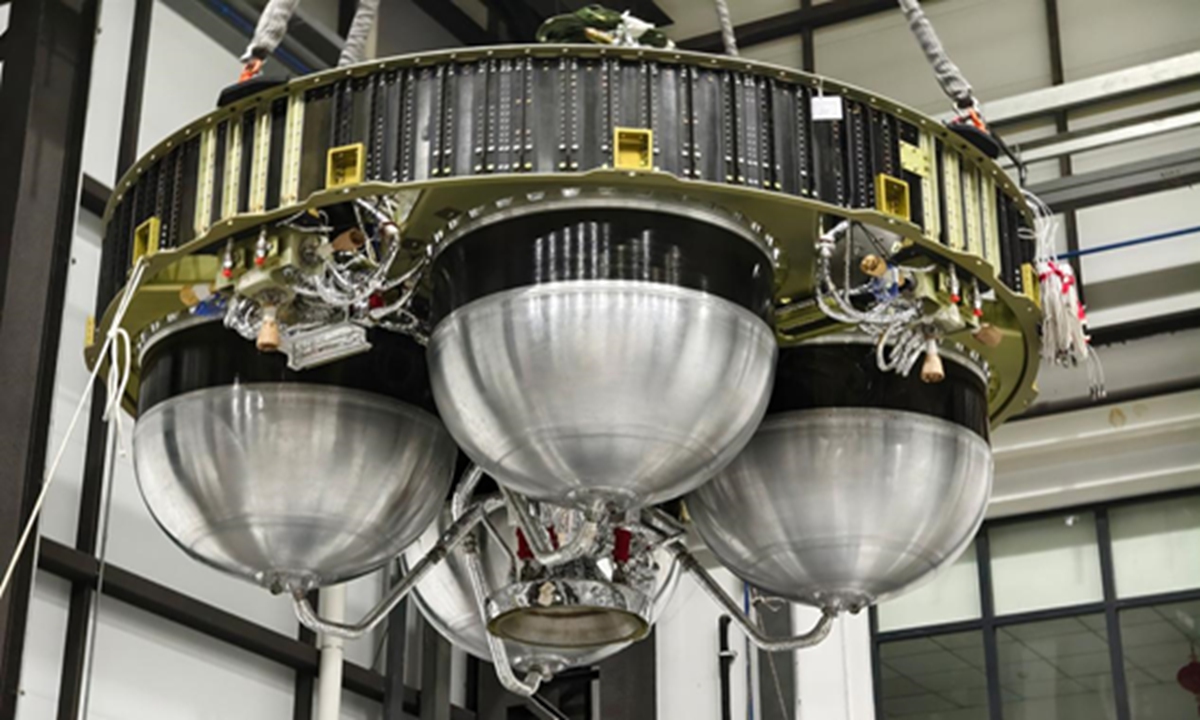
Lixun-1 upper stage, a versatile "space tug" developed by China's commercial space firm CAS Space, is scheduled to make its maiden flight in the first quarter of 2027 after completing a series of key propulsion-system tests, the developer and its chief designer told the Global Times on Tuesday.
The "tug" is designed to ferry satellites from one orbit to another and support missions ranging from constellation deployment to lunar exploration.
While the main stages of a rocket carry payloads from the ground into an initial orbit, an upper stage takes over once the craft is in space. By repeatedly restarting its engine and changing orbit, Lixun-1 can deliver satellites to higher or different orbits, distribute multiple spacecraft to separate destinations during a single launch, or send probes onto trajectories toward the moon and beyond, Global Times learned from the developer.
Yang Haoliang, chief designer of the Lixun-1 upper stage, compared the system to a shuttle service. "If the regular stages of a launch vehicle are like a long-distance bus," - they carry the upper stage and satellites from Earth to a near-Earth parking orbit - the upper stage then takes over as a "space tug," carrying its satellite "passengers" onward to their designated orbital "stops," Yang explained.
That capability can have a direct impact on how efficiently satellites are launched and operated, Yang said. If a satellite has to climb from an initial orbit to its final destination using its own engine, the process can consume a considerable amount of onboard propellant and reduce the fuel available during its operational life. An upper stage can instead perform that orbital transfer, helping conserve satellite fuel and potentially extend its service life.
It can also make one rocket launch do more work. Instead of releasing a batch of satellites into roughly the same orbit, Lixun-1 can repeatedly ignite its engine and maneuver between deployments, sending different satellites to different altitudes and inclinations. Yang said this would help accelerate constellation deployment while improving the efficiency of individual launches.
The practical ambitions behind the system are backed by a major technical milestone reached this month. In August, Lixun-1 completed its PV-001 integrated propulsion-system coordination firing test, during which the entire system operated smoothly for 566 seconds.
Yang told the Global Times that the current Lixun-1 upper stage has a thrust of 20 kilonewtons and can achieve a specific impulse of 315 seconds, which he described as reaching an internationally leading level. The August firing covered the planned profile for the maiden mission, an important step before the system proceeds to flight testing.
The test was more than a demonstration of the engine itself. As an important system-level verification during development, it examined the coordination and engineering reliability of the engine pressurization system, propellant delivery system, propellant management system and servo-control system under the fully integrated configuration.
Of a series of tests that accumulated 5,211 seconds of firing time, the latest one focused on three core technologies: a high-thrust, high-performance 20-kilonewton upper-stage engine capable of multiple starts; balanced propellant delivery from multiple parallel tanks; and a highly reliable integrated electrical system. Their successful verification means Lixun-1 has completed its system-level testing and is ready to move into the flight-test phase, according to the developer.
Lixun-1 has been designed as a modular and generally adaptable upper stage rather than a system tied to only one rocket. It is intended to work with CAS Space's Kinetica-2 and Kinetica-2 heavy-lift variants as well as other launch vehicles, Yang said.
When paired with the Kinetica-2 family, Lixun-1 could significantly expand the rocket's mission range. For communications missions, it could deliver satellites to geosynchronous transfer orbit or even directly to geosynchronous orbit, conserving satellite propellant while supporting the deployment of high-throughput satellites and future 6G communications spacecraft.
For multi-satellite missions, the combination could distribute spacecraft to different orbital altitudes and inclinations during a single launch, potentially serving both low-Earth-orbit constellations and medium- or high-orbit payloads. For deep-space missions, it could place probes onto Earth-moon transfer trajectories and support lunar exploration, Yang said.
The upper stage is designed to be able to conduct more than 20 engine ignitions, autonomously plan orbital-transfer routes and operate under the vacuum and extreme temperature conditions of space. After completing payload deployment, it can also carry out orbital disposal maneuvers to reduce space-debris risks.
Yang said the Lixun-1 and Kinetica-2 combination is designed to cover the vast majority of commercial satellite launch requirements while retaining the ability to participate in major national space projects. More broadly, the upper stage forms part of CAS Space's effort to build launch capabilities reaching medium and high Earth orbits and deep space, extending the reach of China's commercial space sector toward higher orbits and more distant destinations.
。 《日报》全媒体记者 张宝程报道 农历正月十五晚上,兴城古城有摸狮子的习俗,当地公安、消防、交通、城管等部门提前做好预案,科学施策、精准预判、严阵以待,并呼吁广大市民礼让出行、文明参与,力求让这项活动安全、有序、圆满进行。 从正月十五开始,在兴城古城北门、西门入口处,设安检通道,广大群众不要携带较大包裹,积极配合安检人员进行安检,在安检过程中不要拥挤。

B | 为了缓解晚上古城人流压力,保障广大人民群众出行安全,请广大群众错峰到古城摸狮子,尽量在上午、下午摸狮子。

C | 晚上摸狮子,请由北门、西门进入古城。

D | 由北门进入古城,直行通过钟鼓楼到南街摸狮子;由西门进入古城,直行至钟鼓楼时,右转进入南街摸狮子。摸完狮子后,由东门、南门出城,车辆在东门外、北门外的,可由南门里左转沿城墙转到东门出城;车辆在南门、西门外或北门外的,可直接出南门后右转到西门外。北门、西门只进不出,南门、东门只出不进。 因晚上摸狮子人流量较大,请广大群众不要在古城内十字街面上停留,摸完狮子后尽快出城。公安执勤人员会根据情况适时限流,限流时请广大群众耐心等待,积极配合公安执勤人员工作,听从指挥。 古城内外全时段禁止燃放烟花爆竹,对于违法燃放烟花爆竹的、非法销售烟花爆竹的,公安机关将严厉打击。除向公安机关报备的无人机外,古城内外禁止无人机飞行,非法飞行的无人机,公安机关将依法依规对无人机操控人员及无人机予以严肃处理、处置。 同时,有关部门还发布了元宵节古城周边车辆通行线路及停车指南。 驶入:东关岗、古城东门进行临时交通管制,车辆禁止通行驶入;古城东北角至古城北门路段进行临时交通管制,车辆禁止通行驶入;在古城东北角至古城东门路段停车的车辆由新四通路口驶入;在古城东门、魁星楼、南门外停车的车辆由橘子粥头路口或广来宾馆路口驶入;南关交通岗路口至南门路段进行临时交通管制,车辆禁止通行驶入;古城西门进行临时交通管制,车辆禁止通行驶入。在西门以北停车场停车的车辆,由联营公司路口驶入,停车场饱和后对联营公司路口进行临时交通管制;古城北门进行临时交通管制,车辆禁止通行驶入;在北门外以西停车场停车的车辆,由联营公司路口或由火车站原西关小学方向驶入,停车场饱和后对联营公司路口进行临时交通管制;在北门外北关大集停车场停车的车辆,由联营公司路口及火车站原西关小学或外环路东兴加油站路口驶入。 驶出:东门外以北东北角出去的车辆由新四通路口驶出;东门外以南出去的车辆由广来宾馆或橘子粥头路口驶出;西门外出去的车辆由原西关小学路段至火车站方向驶出;北关大集出去的车辆由外环路东兴加油站方向驶出。 以上停车场全部饱和后,交警对新四通路口、橘子粥头路口、广来宾馆路口、联营公司路口进行交通管制,禁止一切车辆驶入。以上停车场有空位后,视交通情况,解除封控,要服从现场交警指挥疏导。
Current article:http://enqbos0.kelozhaichongbaoshuo.pics/fuz/20260826/8083.html
Published on:20:18:46
栏目相关
- 27岁“美声小歌王”徐杰离世 11岁踢馆封神画面成经典追忆
- 江苏体育局:苏超决赛在南京奥体进行,未来会和各市共同办好联赛
- 哈登降薪+等待立大功!骑士五方交易再获白魔,14+3争冠豪阵出炉
- 《巫师3》重制版战网页面开放:最低配置1660、70GB
- 신라대 부산학센터, 세계도서관정보대회 전시… 전쟁 속 독서도시 부산 알려
- 胡锡进:张丹丹为什么会说这番冷漠无情的话?我百思不得其解
- iOS 27代码显示苹果可对欠款租赁设备启用受限模式
- 姚期智院士:人工智能有局限是好事 | 2026世界人工智能大会
- Waymo将在德国慕尼黑启动自动驾驶测试,计划明年底前正式上线出行服务
- 拼多多平台海纳家用电器海尔授权作假,发残次品
- 京东618第3波阶段三5月28日10点开始6月03日结束,5月31日最便宜划算
- 被指挖走高净值玩家 滨海湾金沙向前总裁下“禁客令”
热门排行
- 体育荣耀与多元文化的激情碰撞 2024 “冠军之夜” 体育盛典璀璨落幕
- Direct flights between Colombo, Lumbini
- Magnitude-5.6 earthquake strikes northwest China's Qinghai
- 直播间七夕“秒抢金饰”套路深,直播间七夕“秒抢金饰”套路深
- 一株、两株、三株…… 用作云南白药重要成分的七叶一枝花被盗挖18株 临安两男子被判有期徒刑并处罚金
- HoopsHype评选历史20大小前锋:詹姆斯断层第一,排名引发热议
- Mirzachowki-Farakka Four Lane: सिर्फ दूरियां ही नहीं घटेंगी, चीन और बांग्लादेश पर भी रहेगी नजर
- 钱塘区持续擦亮“银耀钱塘”企退文化品牌
- 市场大变化:会谈和利率
- 多部门联合开展“安全生产月”集中宣传活动
- 智谱创新研究院落户上城,携手浙大启动六大项目
- Nolan's 'The Odyssey' packs IMAX theaters as fans take high-speed trains for better screens